
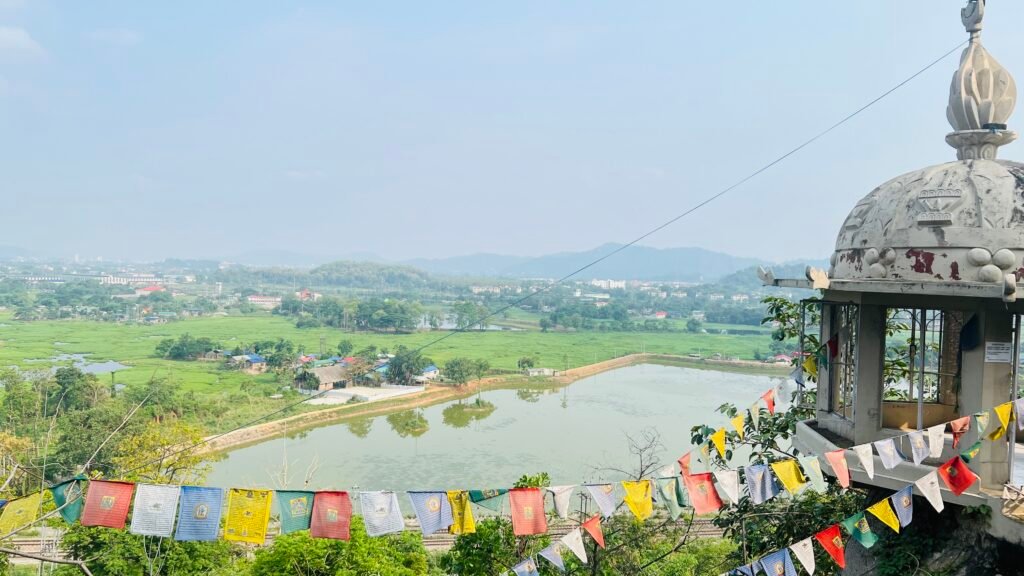
Guwahati, the bustling gateway to northeastern India, is Assam’s largest city and a hub of cultural and economic activity, yet it grapples with significant cleanliness challenges that threaten its public health, environmental sustainability, and aesthetic appeal. As Assam’s prime city enveloping its capital, Guwahati’s sanitation issues, marked by inadequate waste management, littered streets, and polluted water bodies like the Brahmaputra, reflect broader challenges across the state. Rapid urbanization, population growth, and limited infrastructure exacerbate these problems, necessitating urgent action under frameworks like the Swachh Bharat Mission.
The Cleanliness Crisis in Guwahati
Guwahati’s cleanliness crisis is starkly evident in its ranking of 303rd out of 425 Indian cities in the Swachh Survekshan 2019, highlighting deficiencies in waste collection, segregation, and disposal. The city generates approximately 600 tons of solid waste daily, but only a fraction is processed effectively, with much ending up in open dumps or the Brahmaputra River, as noted in local reports. Poor drainage systems lead to waterlogging during the heavy monsoon season (178-305 cm rainfall annually), compounded by plastic waste clogging drains. Biomedical waste from the city’s 482 registered generators often lacks proper handling, posing health risks like waterborne diseases. Public awareness of waste segregation and the 3R principles (Reduce, Reuse, Recycle) remains low, with many residents discarding waste indiscriminately, as highlighted in community feedback on platforms like MyGov.in. These challenges mirror broader issues across Assam, where rural areas struggle with open dumping and urban centers like Dibrugarh (ranked 415th) face similar infrastructure gaps. Addressing Guwahati’s crisis is pivotal to setting a precedent for the state, aligning with Sustainable Development Goals (SDGs) 6 (Clean Water and Sanitation) and 11 (Sustainable Cities and Communities).
Lessons from China: Successful Cleanliness Models

China’s rapid urbanization offers valuable lessons for Guwahati and Assam. Shanghai’s waste management system, implemented in 2019, mandates strict household waste sorting into four categories (recyclable, hazardous, wet, and dry), enforced through fines and public education campaigns. By 2020, Shanghai achieved a 35% recycling rate, with 90% of households complying, supported by 24,000 sorting stations and digital apps for waste collection scheduling. Similarly, Beijing’s “Clean City” initiative uses AI-powered smart bins that identify and sort waste, reducing landfill dependency by 20% since 2018. These systems rely on efficient infrastructure, public-private partnerships, and technology, such as waste-to-energy plants processing 30% of Beijing’s waste. For Guwahati, adopting Shanghai’s model of mandatory segregation with color-coded bins (green for wet, blue for dry) and Beijing’s smart bin technology could enhance waste management efficiency. China’s success in engaging communities through fines, rewards, and apps offers a blueprint for Assam to boost public participation, particularly in rural areas where awareness is low.
Ongoing Efforts in Guwahati and Assam
Under the Swachh Bharat Mission, Guwahati has initiated several cleanliness projects. The city’s 100TPD waste processing plant, operational since 2023, handles municipal solid waste, while door-to-door collection and segregation programs cover 70% of households, as mentioned by Swachh Bharat Mission-Urban Assam reports. The Most Outstanding District Initiative (MODI), launched in 2023, incentivizes cleanliness with ₹100 crore for Assam’s cleanest district, encouraging Guwahati’s Kamrup Metropolitan District to improve waste metrics like segregation and sewage treatment. Community efforts, such as the Guwahati Municipal Corporation’s (GMC) weekly cleanup drives involving resident welfare associations, mirror rural successes like Ransapara village in Goalpara, Assam’s cleanest village for over 20 years due to voluntary resident participation. Across Assam, 48 municipalities have launched solid and liquid waste management (SLWM) projects, with Dibrugarh’s 100TPD facility as a model. These efforts, supported by central funding (35% of SWM project costs), show progress but require scaling to address Guwahati’s and Assam’s broader challenges.
Challenges in Guwahati
Guwahati’s cleanliness efforts are hampered by inadequate infrastructure, with only one major waste processing facility and limited color-coded bins for segregation. The Pollution Control Board of Assam notes inconsistent compliance with Biomedical Waste Management Rules, risking public health. Financial constraints, with ULBs needing to fund 65% of SWM projects, limit progress, as seen in delayed drainage upgrades causing monsoon flooding. Low public awareness, with only 40% of Guwahati residents segregating waste (per local surveys), and unchecked single-use plastics exacerbate the crisis. These issues extend to Assam’s smaller towns and rural areas, where open dumping and lack of waste processing units are prevalent, underscoring the need for state-wide solutions.
Strategies for Urgent Implementation in Guwahati and Assam
To transform Guwahati and extend solutions across Assam, a multi-pronged approach inspired by China and local successes is essential:
1. Strengthening Infrastructure and Policy Enforcement
Guwahati should develop bankable Detailed Project Reports (DPRs) for SWM, as per the 2016 Manual on Municipal Solid Waste Management, to secure private investment and full central funding. Procuring decentralized composting units via the Government e-Marketplace (GeM) portal, as done in China’s smaller cities, can enhance local waste processing. Enforcing a single-use plastic ban, as suggested by Guwahati residents on MyGov.in, and distributing color-coded bins to all households can boost segregation rates, mirroring Shanghai’s model. Assam’s rural ULBs should adopt similar infrastructure, with mini-processing units in districts like Dibrugarh and Jorhat to manage organic waste.
2. Enhancing Public Awareness and Education
Guwahati can launch IEC campaigns, inspired by Beijing’s public engagement, using social media, local radio, and school programs to promote 3R principles. Workshops involving Gram Panchayats and NGOs, as seen in Assam’s Khumtai cleanliness competition, can educate rural communities. Guwahati’s GMC should replicate China’s fine-reward system, penalizing littering and rewarding compliant neighborhoods, as proposed in SBM-Urban’s 2018 MyGov Assam initiative. State-wide seminars can highlight Ransapara’s success, inspiring villages to adopt voluntary cleanup drives.
3. Promoting Community Participation
Guwahati’s resident welfare associations should scale community cleanups, drawing from Ransapara’s model of weekly voluntary drives. Post-festival cleanup days, as suggested by citizens, can engage youth and families. Formalizing ragpickers, as outlined in SBM-Urban Assam, can create inclusive waste management systems, similar to China’s integration of informal workers. Across Assam, Gram Panchayats should organize similar community-led initiatives, ensuring rural areas contribute to state-wide cleanliness.
4. Leveraging Technology and Innovation
Guwahati can adopt Beijing’s AI-powered smart bins and mobile apps for waste collection scheduling, improving efficiency. Decentralized composting and waste-to-energy plants, like China’s, can process Guwahati’s 600 tons of daily waste. Assam’s 2030 Initiative dashboard can track cleanliness metrics, ensuring data-driven progress across districts. Innovations like “Talking Phonics for Autism” demonstrate technology’s potential; similar apps for waste management can engage Assam’s youth.
5. Cultural Integration
Assam’s cultural reverence for cleanliness, rooted in movements like Heraka, can be harnessed in Guwahati through community rituals tied to cleanliness drives. Involving local organizations like the All Assam Students Union can mobilize youth, aligning with Assam’s history of community action. This approach can be replicated state-wide, making cleanliness culturally resonant.
Success Stories and State-wide Generalization
Guwahati’s waste processing plant and Ransapara’s voluntary cleanups are success stories that can be scaled across Assam. China’s Shanghai model shows that strict segregation and infrastructure investment can transform urban centers, applicable to Guwahati and cities like Dibrugarh. The MODI scheme’s district-level incentives can drive competition across Assam’s 125 constituencies, while rural successes like Ransapara can inspire villages state-wide. By replicating Guwahati’s infrastructure and community models, Assam can achieve comprehensive cleanliness.
Guwahati’s cleanliness crisis demands urgent action, with lessons from China’s Shanghai and Beijing models offering a roadmap for success. By strengthening infrastructure, raising awareness, engaging communities, leveraging technology, and integrating cultural values, Guwahati can become a clean, sustainable city, setting a model for Assam. Extending these strategies state-wide through SBM and Assam 2030 initiatives will preserve Assam’s natural and cultural heritage, ensuring a healthier future for all.